

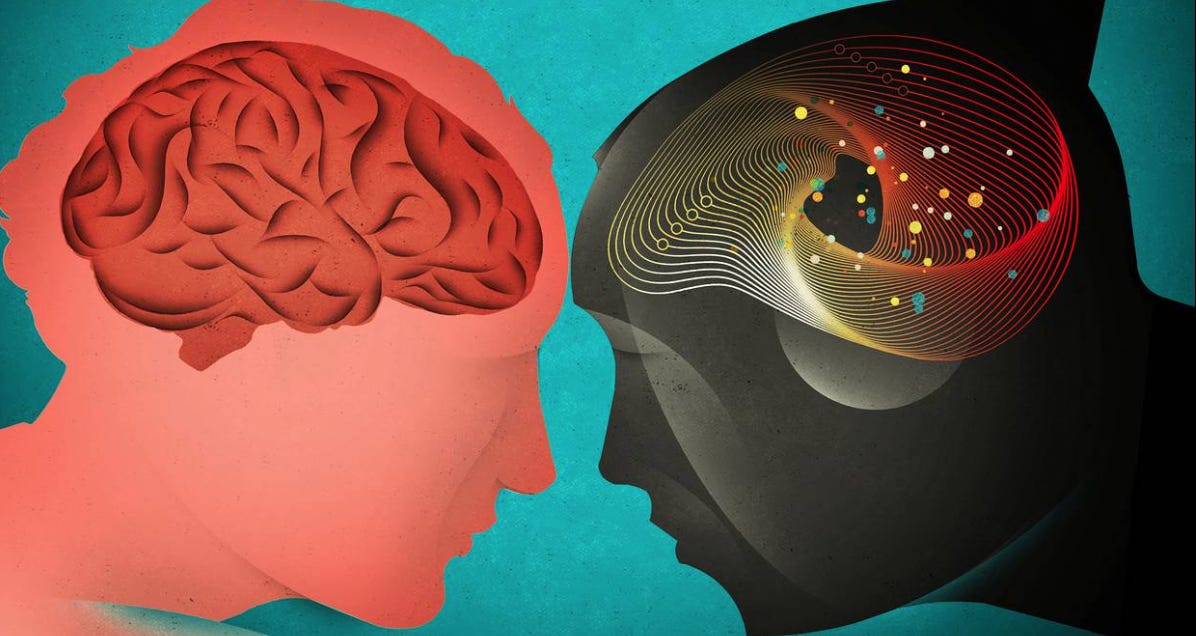
The Internet era reshaped how the world connects. The internet democratized information, outsourced coordination, and linked global markets at unprecedented scale. It enabled people to communicate, transact, and collaborate across borders with speed that once seemed impossible. Yet throughout that transformation, innovation remained fundamentally human-led. Technology amplified human effort, extended human reach, and accelerated human productivity. It did not replace the human mind at the center of value creation.
Today, we are entering a fundamentally different phase.
The AI economy is not a continuation of the internet story. It introduces an entirely new dimension of optimization by adding AI as a parallel intelligence and execution layer alongside humans. AI does not simply help people work faster. It performs cognitive work itself. Where the internet connected people, AI embeds intelligence directly into systems. Where the dot-com era focused on access and efficiency, the AI era reshapes execution, decision-making, and the structure of work itself. This is not an upgrade in connectivity. It is a transformation in how value is created and who or what creates it.
The Workforce Transformation: Humans, AI, and Robotics
For the first time in modern economic history, the workforce is expanding beyond humans to include AI agents and robotics as active contributors to production and decision-making. This shift fundamentally changes how organizations allocate resources and think about cost structures.
Historically, technology spending accounted for a relatively small share of company revenue, often in the range of single-digit percentages, while human labor represented the largest expense, frequently 30 to 40 percent or more in knowledge-driven industries. AI disrupts this long-standing balance by positioning itself as a form of virtual labor, one that increasingly performs tasks once reserved for human workers.
As AI agents and autonomous systems take on cognitive and operational roles, businesses begin to evaluate technology investment not as overhead, but as an alternative to traditional workforce costs. This marks a structural shift in how value is created, how budgets are planned, and how organizations define productivity in the AI economy.
Consider this scenario: a CEO evaluating resource allocation might now debate between investing in an AI Agent or hiring additional customer service representatives. AI agents, equipped with natural language processing, can manage customer inquiries at scale, operate 24/7, and continuously improve through machine learning. Similarly, marketing departments might replace entry-level analysts with AI tools capable of running sophisticated campaigns, analyzing market data, and optimizing strategies in real-time.
This shift marks a structural change in how budgets are planned, how productivity is measured, and how organizations define growth. The internet era disrupted industries by expanding access. The AI economy disrupts by automating and transforming execution itself. Given the scale of human-related costs in most organizations, the economic incentive to adopt AI is not speculative. It is structural.
Beyond Automation: A Cross-Industry Transformation
The impact of the AI economy extends far beyond any single function or sector. In healthcare, AI-driven diagnostics and treatment planning systems accelerate decision-making and reduce dependence on manual analysis. In manufacturing, intelligent robotics optimize production lines, operate continuously, and adapt dynamically to changing conditions. In finance, AI systems manage risk, detect anomalies, and execute complex strategies at machine speed. These examples represent only the early stages of a much broader shift toward intelligent automation. As AI systems become more capable and more integrated, they reshape not only how work is done, but how organizations are designed and how value flows through the economy.
The AI economy is poised to surpass the Internet era not only in scale, but in depth of impact. The internet amplified human capability. AI restructures it. The transition from augmenting labor to replacing and redefining it in certain roles carries profound implications for productivity, employment, and competitive advantage.
For organizations, investors, and policymakers, the challenge is no longer whether AI will transform industries. That transformation is already underway. The real question is how quickly institutions can adapt their strategies, structures, and mindsets to operate in an economy where intelligence itself is no longer scarce.
The AI economy represents a seismic shift in how we think about labor, technology, and value creation. By moving beyond traditional IT budgets and into the core of workforce economics, AI unlocks opportunities that far exceed those of the internet era. This is not merely a technological revolution. It is a redefinition of economic possibility.
For those prepared to embrace it, the future is not constrained by legacy structures or linear growth. It is boundary-free, adaptive, and shaped by how intelligently we choose to collaborate with the systems we create.